Eye Shapes Guide: What Eye Shape Do I Have?
Use the crease, iris, corners and spacing—not one selfie or a beauty trend—to identify the eye-shape traits you actually have.

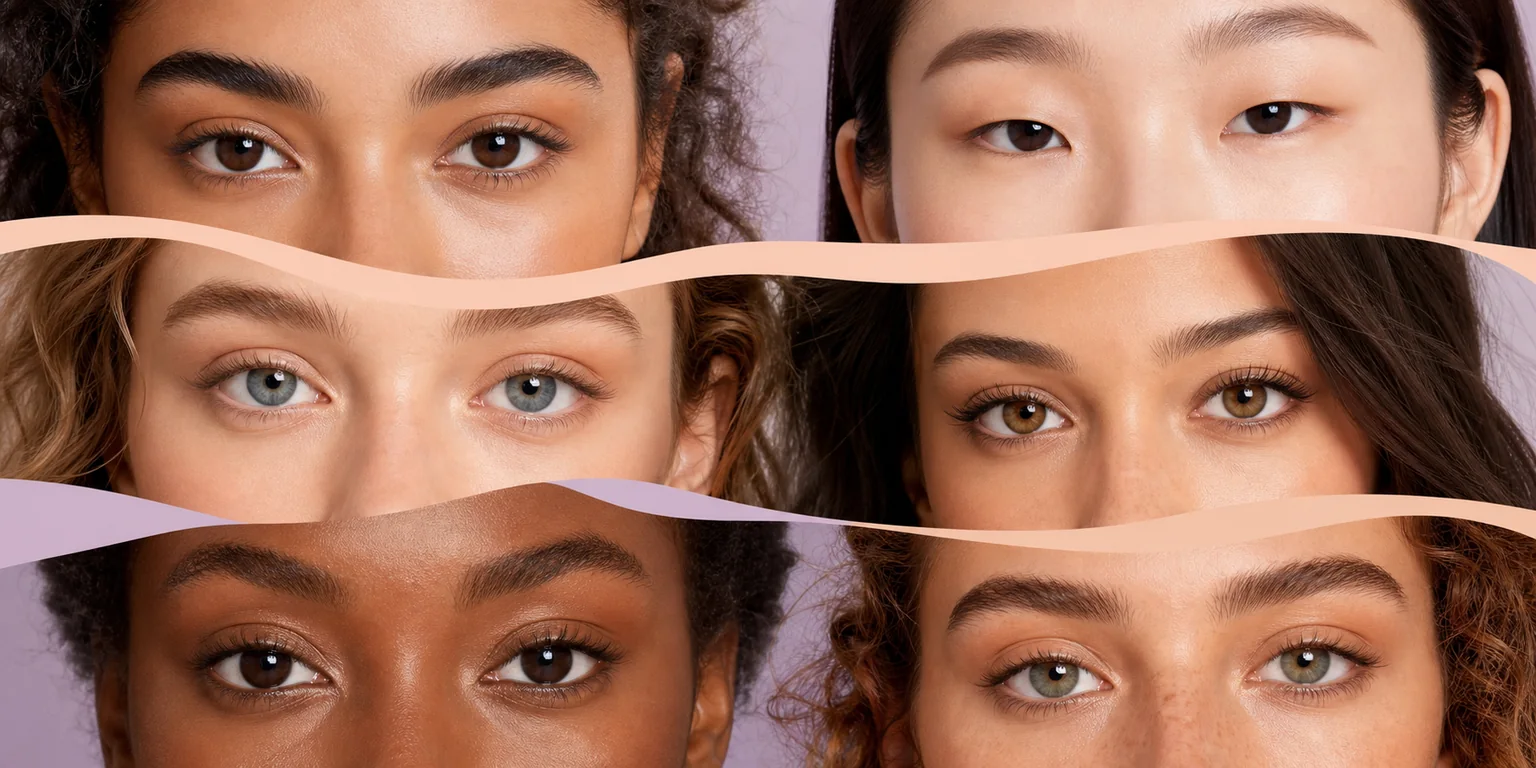
In this guide
If you are asking “what eye shape do I have?”, start with structure rather than makeup. Look straight ahead in even light and compare four features: whether a crease is visible, how much white shows around the iris, whether the outer corners tilt, and how the space between the eyes compares with one eye's width.
The most useful answer is often a combination such as hooded almond, upturned almond or round close-set. This guide gives you a repeatable check and visual examples without turning natural variation into a score.
What Determines Your Eye Shape?
Your eye shape is not defined by eye color or eyebrow style. It comes from several visible relationships that should be checked together:
- Outline: whether the opening looks longer than it is tall or appears more circular.
- Iris exposure: whether white is visible above or below the iris when you look straight ahead.
- Lid structure: whether the crease is clear, partly covered by skin, or not visibly defined.
- Corner direction and spacing: whether the outer corner sits higher or lower, and whether the eyes are close-set or wide-set.
Best short answer
Use one primary outline label—usually almond or round—then add a modifier such as hooded, monolid, upturned, downturned, close-set or wide-set.
How to Figure Out Your Eye Shape in Five Steps
Use a mirror or an unfiltered, straight-on photo. Relax your forehead and keep your eyes naturally open; raising the brows can expose more lid space and change the result.
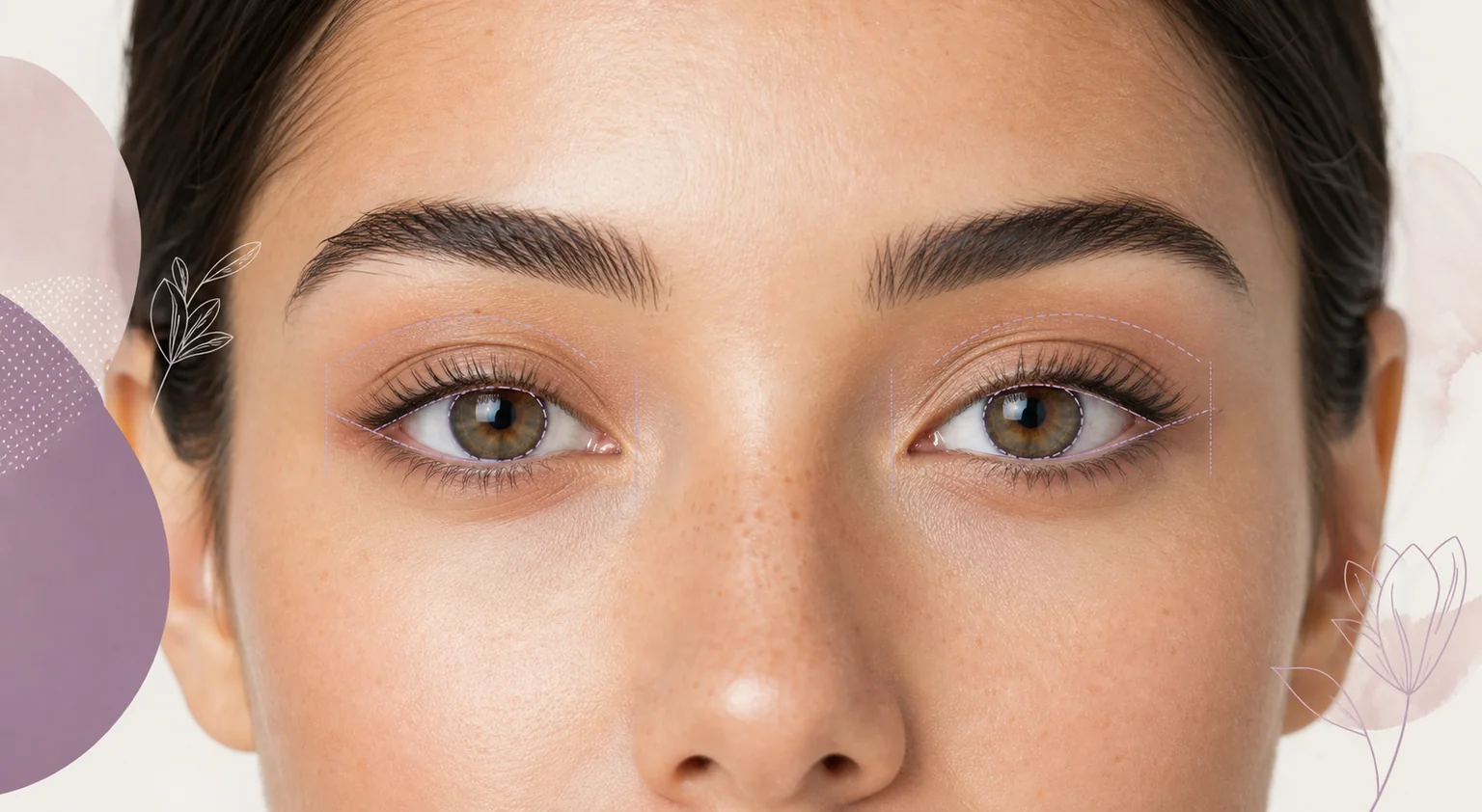
1. Check the basic outline
If the eye opening is elongated and tapers at both corners, almond is the strongest starting point. If it looks more open vertically and the curve feels circular, round is more likely.
2. Look for white around the iris
With relaxed eyes, almond eyes usually have little or no white above and below the iris. Round eyes often show a visible strip of white below the iris, above it, or both.
3. Inspect the eyelid crease
A crease that is partly hidden by the upper lid suggests hooded eyes. A lid without a clearly visible crease suggests monolid structure. A visible crease with open mobile-lid space does not require either modifier.
4. Compare the inner and outer corners
Imagine a horizontal line through both corners. If the outer corner is higher, the eyes are upturned; if it is lower, they are downturned. A small difference is enough to use the modifier.
5. Measure spacing
Compare the gap between your eyes with the width of one eye. A smaller gap suggests close-set eyes, a larger gap suggests wide-set eyes, and a similar measurement suggests average spacing.
Eight Common Eye Shapes and How to Recognize Them
These categories describe different dimensions, so they can overlap. Almond and round mainly describe outline; hooded and monolid describe the lid; upturned and downturned describe corner direction; close-set and wide-set describe spacing.
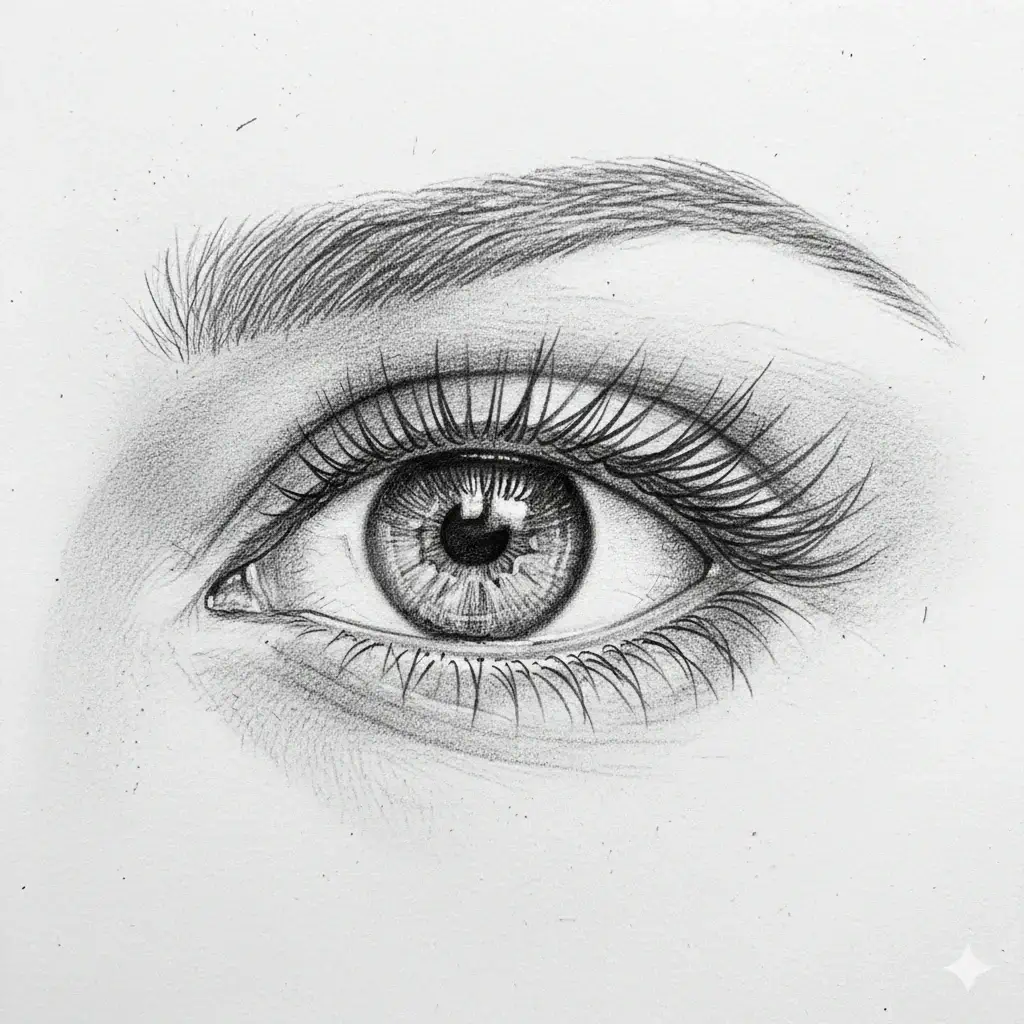
Almond eyes
Almond eyes are longer than they are tall and narrow gently toward both corners. The iris usually touches or nearly touches the upper and lower lid.
Look for: an elongated outline, tapered corners and little visible white above or below the iris.
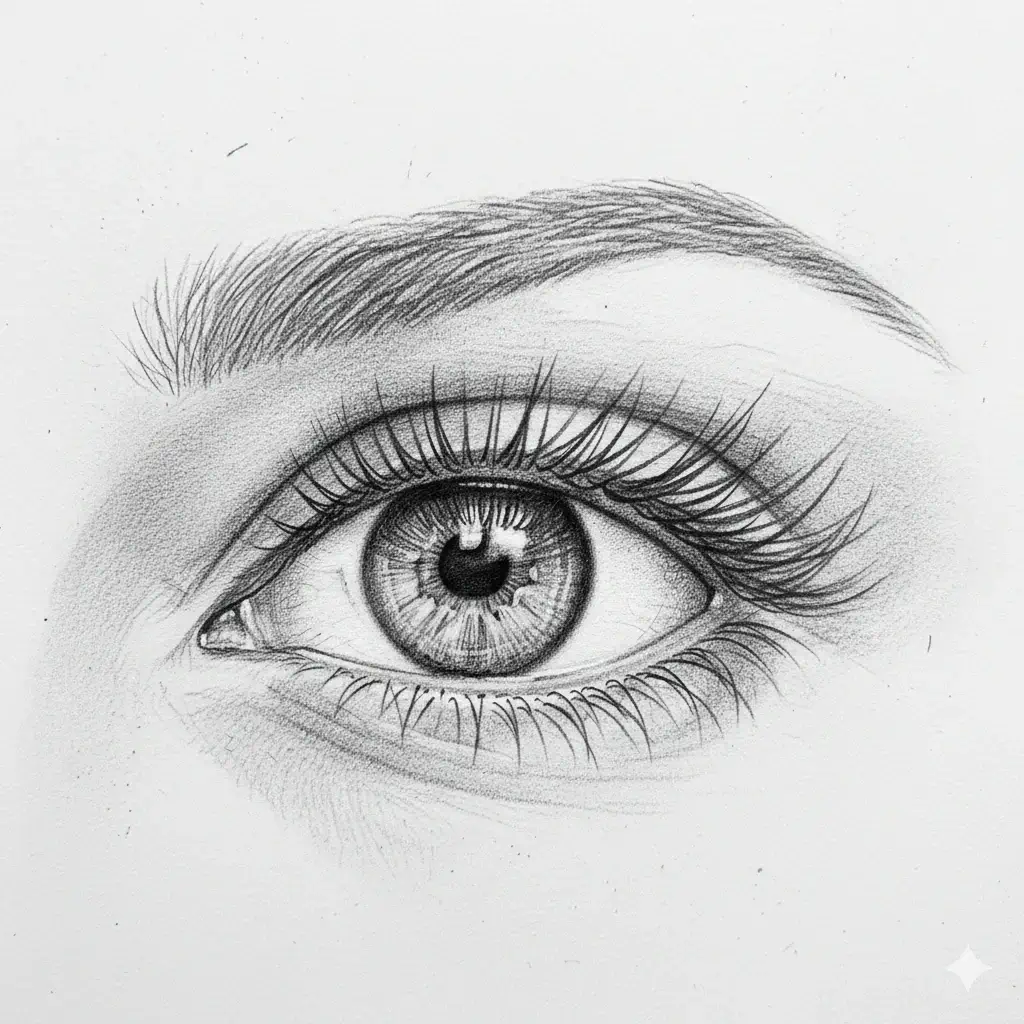
Round eyes
Round eyes have a more open vertical appearance. The iris can look more fully visible, especially when a strip of white shows below it.
Look for: a circular impression, noticeable vertical openness and less taper at the corners.
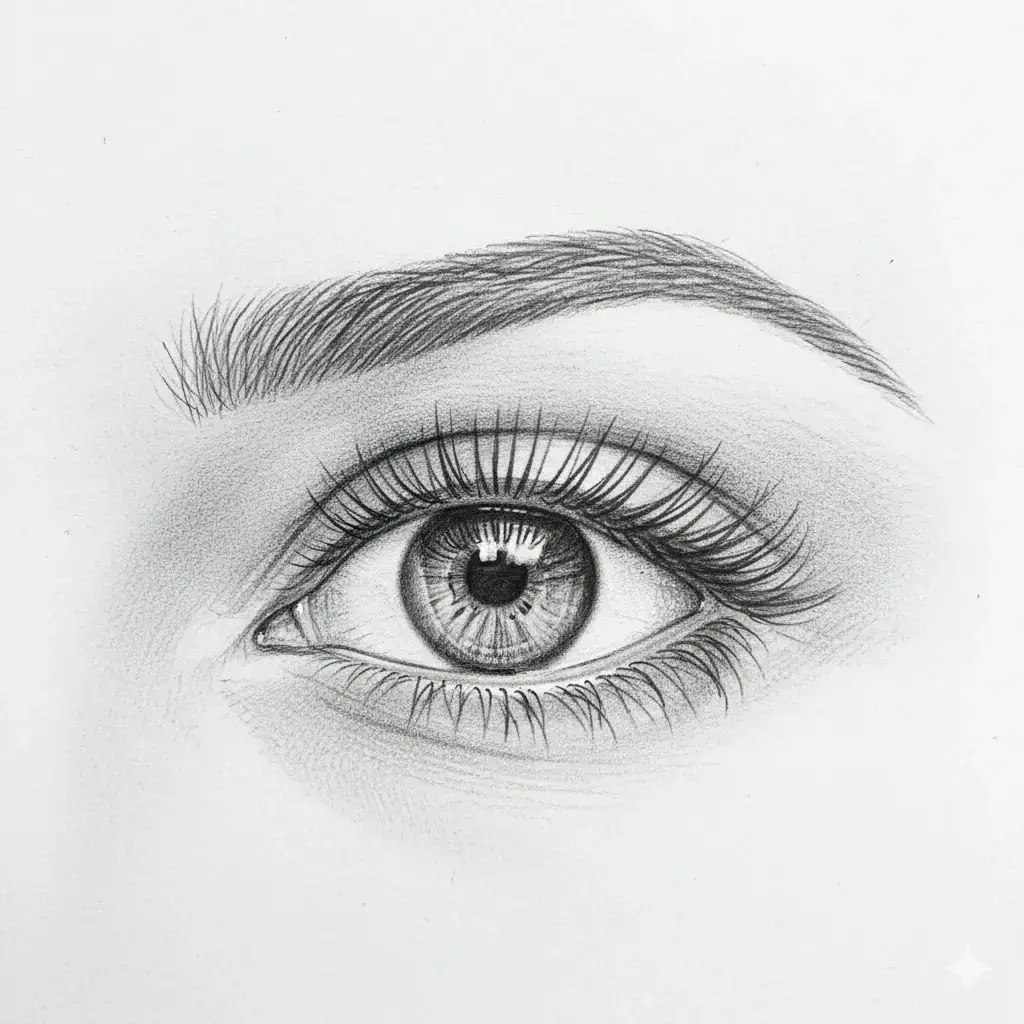
Hooded eyes
Hooded eyes have skin from the brow area that folds over part of the crease, reducing visible mobile-lid space when the eyes are open.
Look for: a crease that is present but partly hidden, especially at the outer half of the lid.
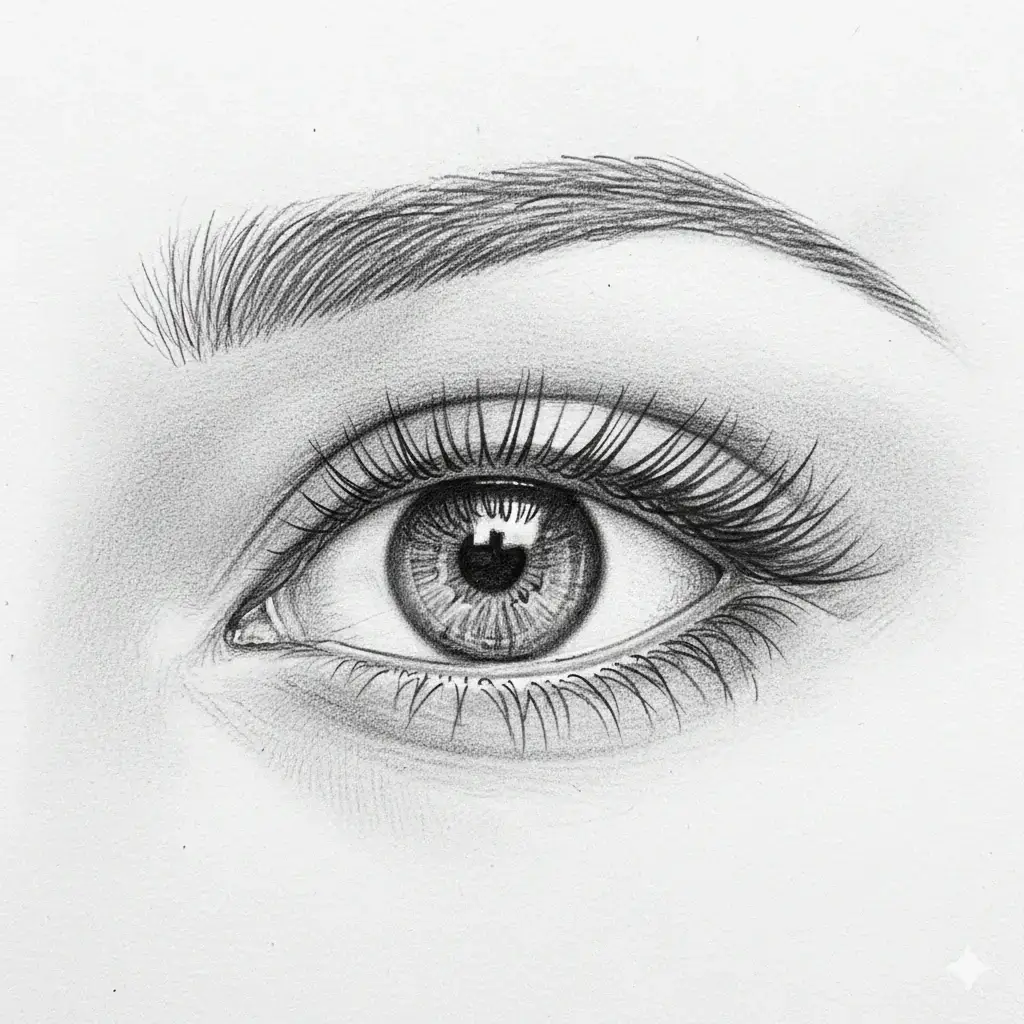
Monolid eyes
Monolid eyes do not show a strongly defined crease across the upper lid. The surface from lash line to brow can appear smoother and more continuous.
Look for: no obvious crease in a relaxed straight-ahead view; do not confuse this with a hidden hooded crease.
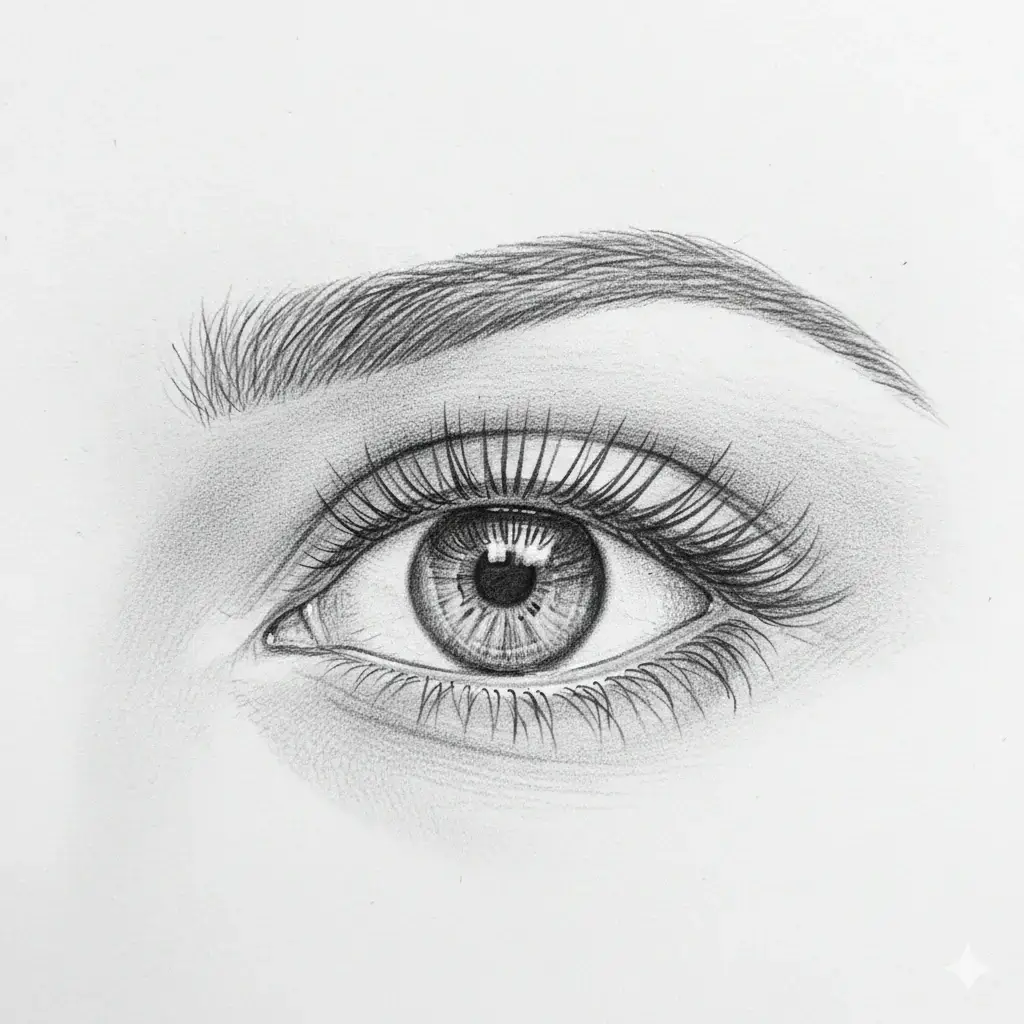
Upturned eyes
Upturned eyes have outer corners that sit slightly higher than the inner corners, creating a gentle upward sweep.
Look for: an outer-corner tilt that remains visible without eyeliner or a raised-brow expression.
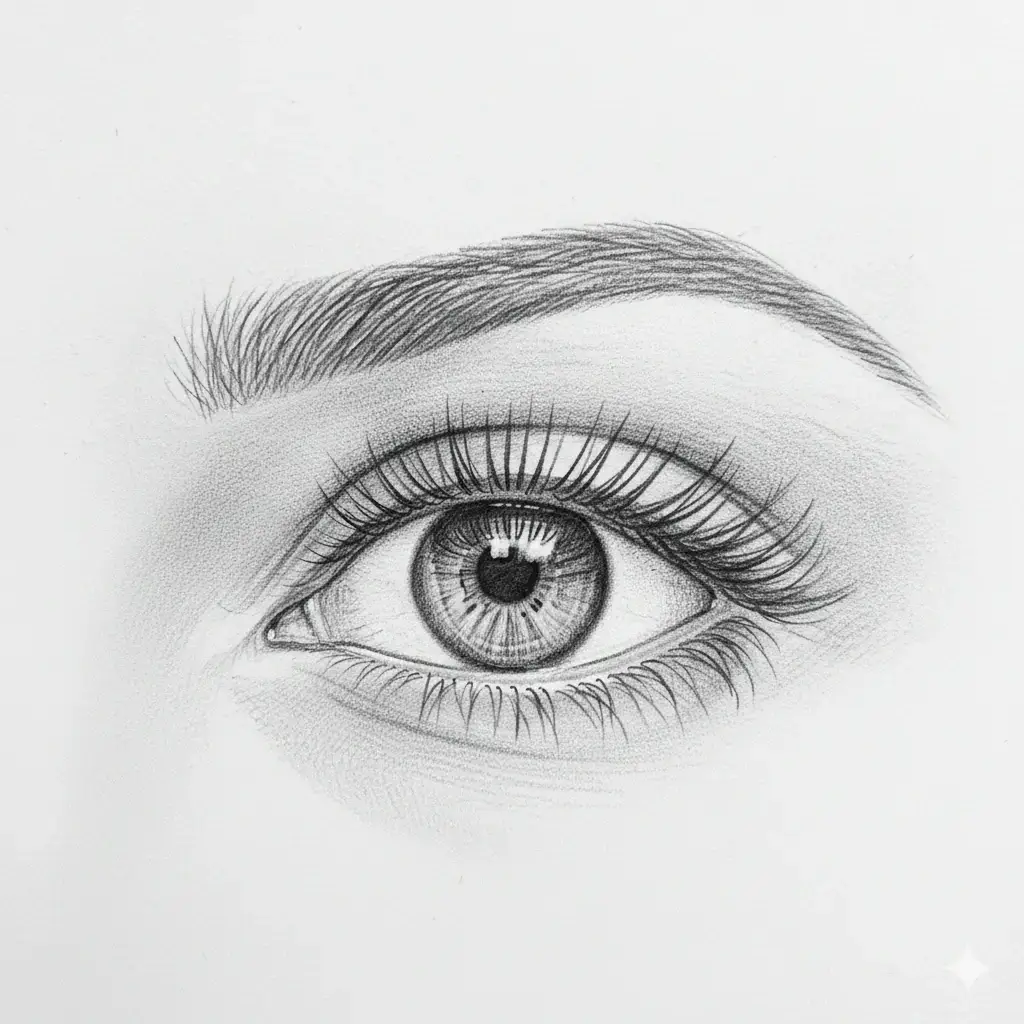
Downturned eyes
Downturned eyes have outer corners that sit slightly lower than the inner corners, creating a soft downward slope.
Look for: a lower outer corner in a level photo; lashes and makeup can hide the direction.
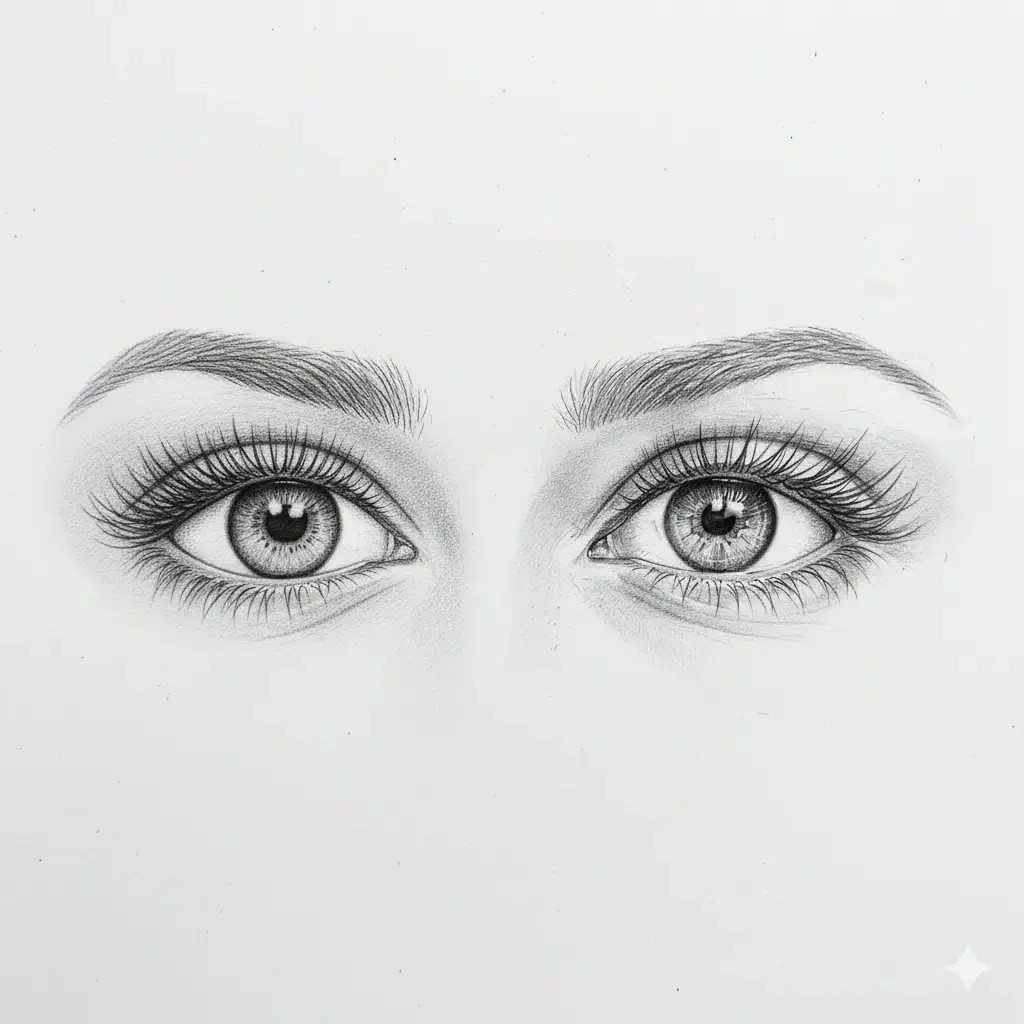
Close-set eyes
Close-set eyes are positioned with a gap between them that is narrower than the width of one eye.
Look for: spacing, not outline—the eyes can also be almond, round, hooded or monolid.
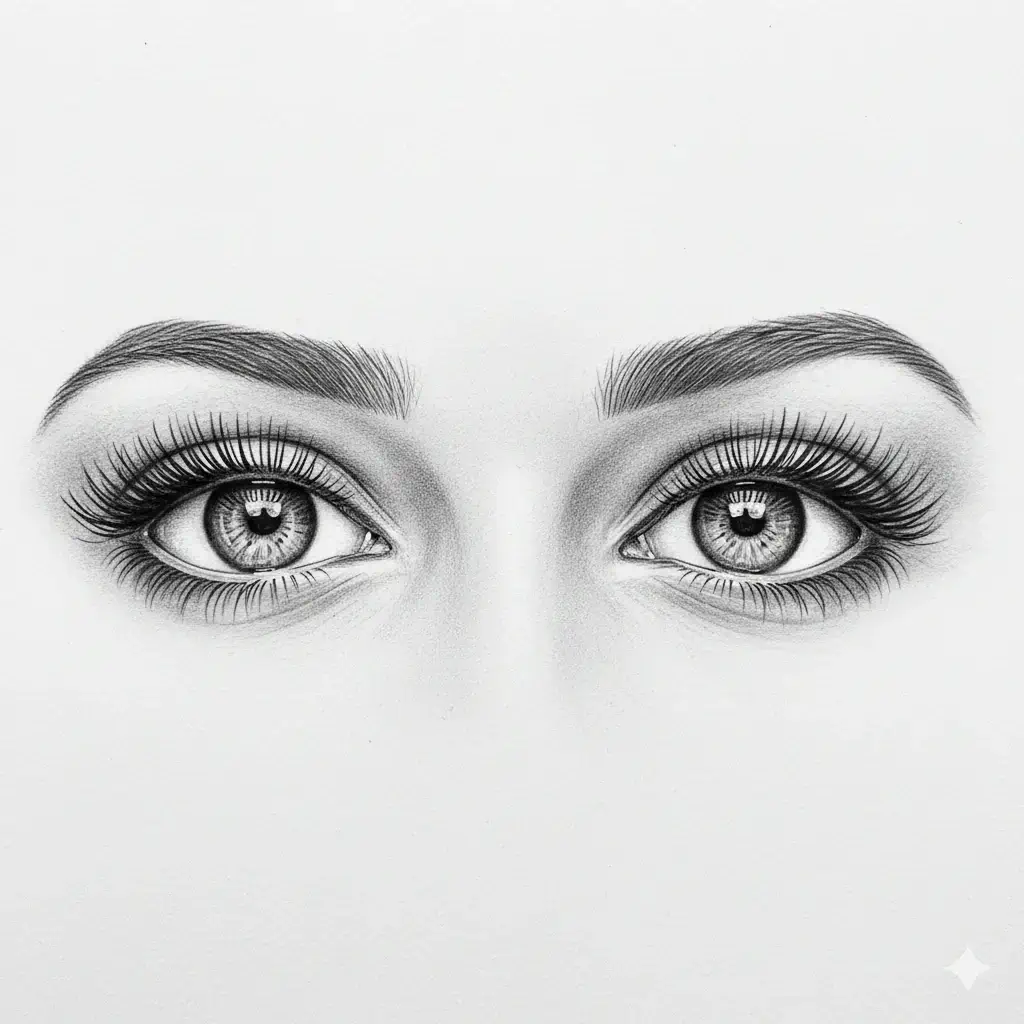
Wide-set eyes
Wide-set eyes have a gap between them that is wider than the width of one eye.
Look for: a larger central gap while checking a straight-on image with minimal lens distortion.
Eye-Shape Comparison Table
Use this table to narrow the result. Begin with the outline and iris, then add crease, corner or spacing modifiers.
| Eye shape | Iris clue | Crease clue | Corner or spacing clue |
|---|---|---|---|
| Almond | Little white above or below | Any crease type | Tapered inner and outer corners |
| Round | White often visible around iris | Usually visible but varies | More open, less tapered outline |
| Hooded | Varies | Partly covered by upper-lid skin | Can be upturned or downturned |
| Monolid | Varies | No strongly visible crease | Can pair with any tilt |
| Upturned | Varies | Varies | Outer corner sits higher |
| Downturned | Varies | Varies | Outer corner sits lower |
| Close-set | Varies | Varies | Gap is under one eye width |
| Wide-set | Varies | Varies | Gap is over one eye width |
Can You Have More Than One Eye Shape?
Yes. A person may have hooded almond eyes, round downturned eyes, monolid upturned eyes or another combination because the labels measure different features. Combining labels is more accurate than forcing every eye into one box.
Your two eyes may also differ slightly in crease depth, opening or corner height. Compare both eyes, use the traits that repeat, and avoid treating a small asymmetry as a flaw. If a sudden eyelid or eye-position change appears, seek professional medical advice rather than relying on a cosmetic guide.
Photo Tips for a More Accurate Eye-Shape Check
A wide-angle selfie, squint or raised brow can change how the eye opening looks. Use these controls before comparing examples:
- Use soft front light and remove heavy eyeliner or false lashes if possible.
- Hold the camera at eye level and far enough away to reduce wide-angle distortion.
- Look at the lens with a relaxed face; do not widen the eyes or lift the eyebrows.
- Compare more than one photo because blinking and expression can hide the crease.
- Treat filters, mirrored images and beauty-mode edits as unreliable for structural checks.
Eye-Shape FAQ
What is the most common eye shape?
Almond is frequently used as a broad outline category, but there is no single reliable worldwide percentage. Populations and labeling methods differ, and many eyes combine almond structure with hooded, monolid or corner-direction traits.
How do I know if my eyes are almond or round?
Look straight ahead. If the opening is elongated, the corners taper and little white shows above or below the iris, almond is likely. If the opening is more circular and white is visible around the iris, round is more likely.
Are hooded eyes the same as monolids?
No. Hooded eyes usually have a crease that is partly covered by skin, while monolid eyes do not show a strongly defined crease in a relaxed straight-on view. Both can have almond or round outlines.
Can eye shape change with age?
The eyeball structure does not switch categories, but eyelid skin, crease visibility and brow position can change with age, fatigue or swelling. That can make eyes look more or less hooded in photos.
Can AI identify my eye shape from a photo?
AI can estimate visible traits, but results depend on angle, lighting, makeup and training data. Use it as a second opinion and compare the iris, crease, corner direction and spacing yourself.
What are the main eye shape names?
Common descriptive names include almond, round, hooded, monolid, upturned, downturned, close-set and wide-set. These labels describe different features, so one person may accurately have a combination such as hooded almond or upturned close-set eyes.