High vs Low Cheekbones: How to Tell Which You Have
A calm, practical guide to cheekbone position, projection, photo perspective, and the difference between describing a feature and ranking a face.

On this page
If you are comparing high vs low cheekbones, the useful question is where the widest or most palpable part of the cheek sits—not whether one version is automatically more attractive. Cheekbones vary naturally across people, and the same face can look different when the camera, lighting, expression, or hair changes.
This guide explains where the cheekbones are, how height differs from forward projection, and how to make a repeatable check with a mirror or a straight-on photo. The goal is a clearer description of your features, not a beauty verdict.
What is the difference between high and low cheekbones?
High cheekbones are commonly described as sitting closer to the lower eyelid and upper midface. Lower cheekbones appear farther down toward the middle of the cheek. That description refers to vertical position; it does not automatically tell you how far the cheekbone projects forward, how wide it is, or how visible it looks in a photo.
A face can have cheekbones that sit high but do not project strongly, or cheekbones that sit lower while still looking prominent from the front or side. That is why a comparison should use several views and should separate position, width, and projection.
Best starting rule
Use a level front view to judge position, a gentle three-quarter view to notice projection, and the same lighting for both. If the result is unclear, record it as uncertain or mixed rather than forcing a label.
Where are the cheekbones?
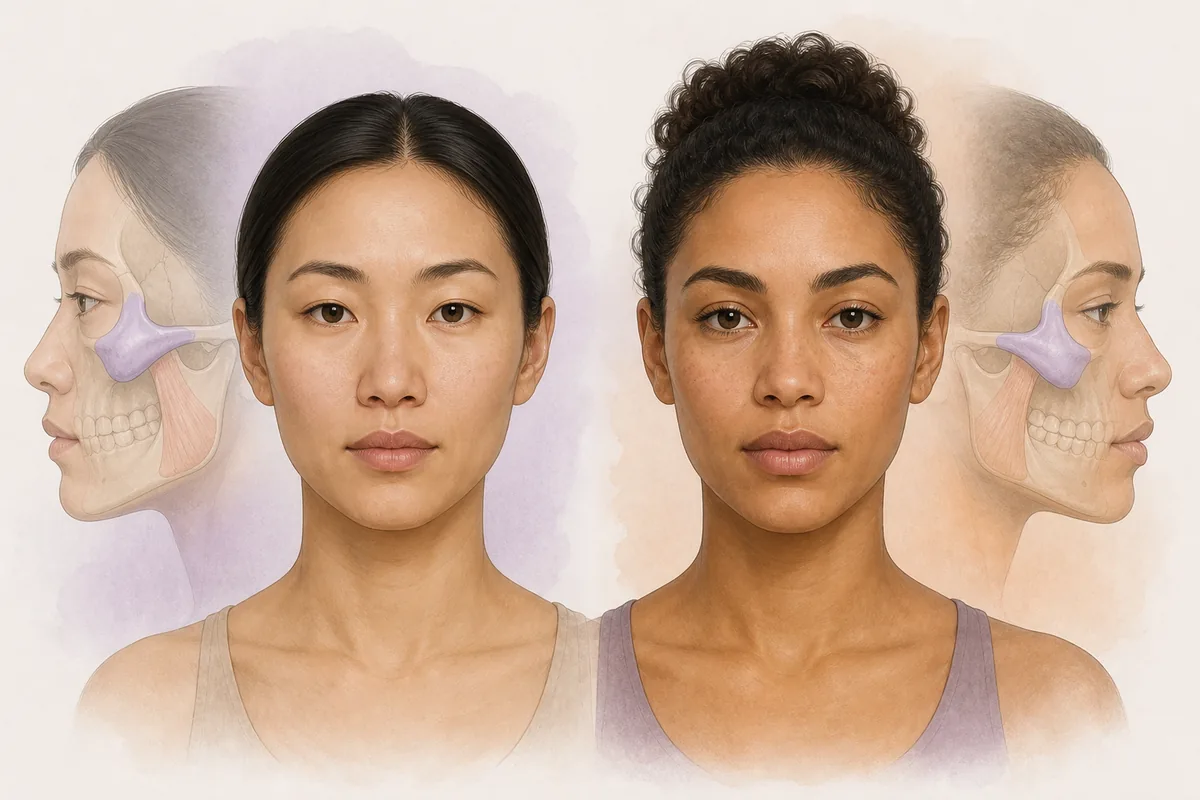
The cheekbones are the bony structures beneath the outer lower eye area and toward the side of the face. Anatomically, the zygomatic bones help form the cheek prominence, the outer wall of the eye socket, and part of the bridge between the eye area and the upper jaw. In everyday appearance language, people often use cheekbones to mean the ridge or curve that can be felt beneath the skin.
To find them, place clean fingertips just below the outer corner of the eye and move slightly outward and downward. You should feel a firmer ridge before the softer cheek tissue begins. Do not press hard or use soreness as evidence; the aim is only to locate the general structure.
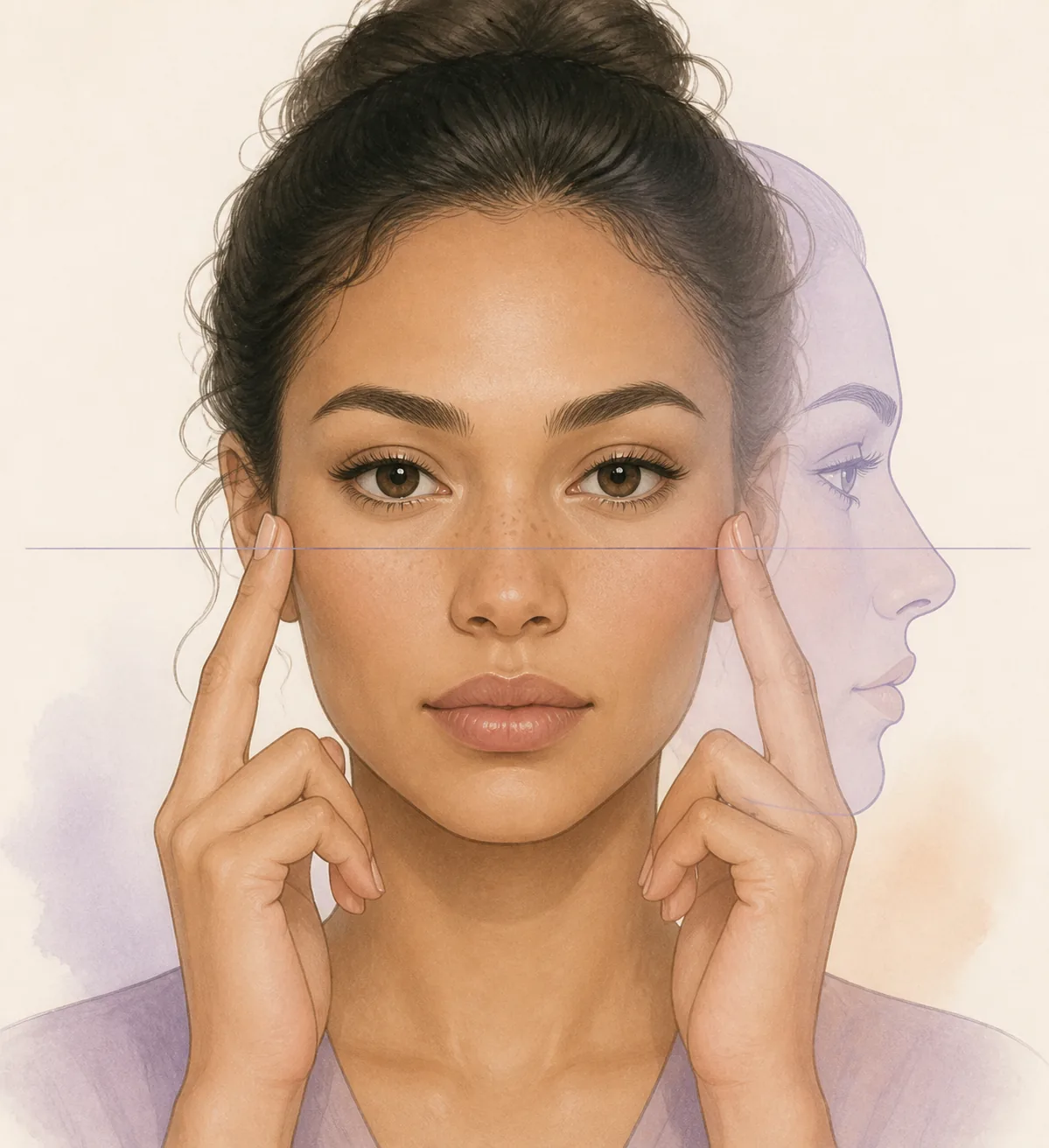
High vs low cheekbones: clues to compare
Use these descriptions as visual clues, not strict categories. Bone structure, soft tissue, age, facial expression, and camera perspective can all change how the cheek area reads.
Higher cheekbone position
Common clue: The strongest ridge or visible shadow often appears closer to the lower eye area and upper cheek.
Keep in mind: A close phone lens or strong overhead light can make the area look higher or sharper than it is.
Lower cheekbone position
Common clue: The main cheek fullness or ridge appears farther down toward the mid-cheek and beside the nose.
Keep in mind: Fuller soft tissue can hide the bony landmark without changing the underlying structure.
More forward projection
Common clue: The cheek area may catch light from a three-quarter or side view and create a clearer front-to-back contour.
Keep in mind: Projection is not the same as height; a lower cheekbone can still project forward.
Wider cheek area
Common clue: The cheekbones may form the widest part of the face when you compare forehead, cheek, and jaw width.
Keep in mind: Width is a face-shape measurement, so it should not be used alone to label cheekbone height.
| Feature to compare | Often associated with higher position | Often associated with lower position | Why it matters |
|---|---|---|---|
| Vertical location | Closer to the lower eye area | Farther down toward mid-cheek | This is the main high-versus-low distinction. |
| Forward projection | May or may not project forward | May or may not project forward | Height and projection are different dimensions. |
| Visible shadow | Can appear higher under directional light | Can appear lower or softer | Lighting can exaggerate the difference. |
| Face width | May be the widest area | May still be the widest area | Width alone does not identify height. |
| Photo reliability | Needs a level, neutral view | Needs the same view for comparison | Close lenses and tilted heads distort both. |
How to tell if you have high or low cheekbones
A repeatable check is more useful than a close selfie. Use a mirror or a neutral photo taken from farther away, keep your head level, and remove variables one at a time.
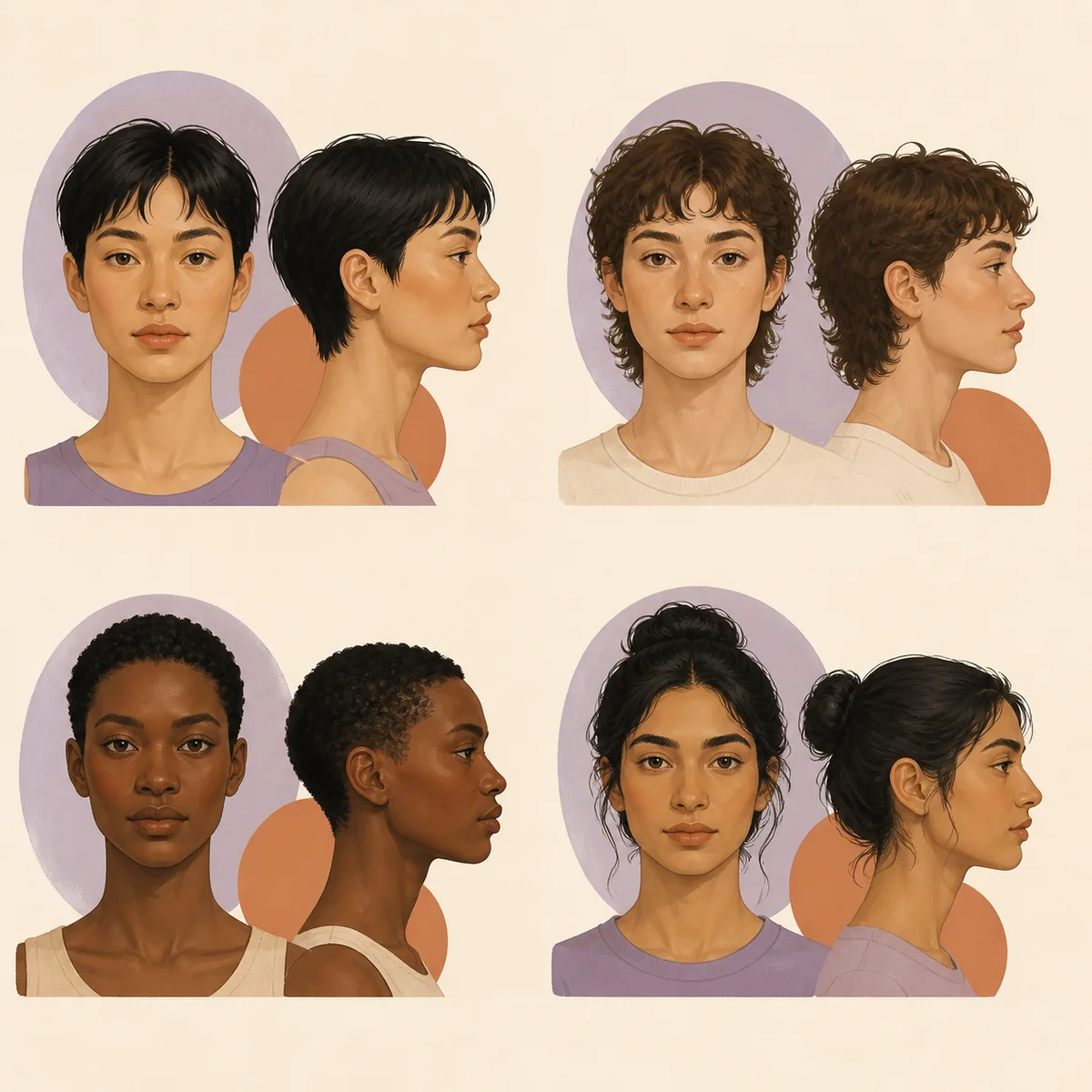
1. Prepare a neutral view
Use even light, a relaxed expression, and a camera at eye level. Avoid a wide-angle close selfie because it can enlarge the center of the face and change the apparent cheek contour.
2. Find the firm landmark
Look just below the outer eye and gently trace toward the side of the face. Note where the firmer ridge becomes easiest to feel or where the main shadow begins, without pressing or pinching.
3. Compare vertical position
Ask whether that landmark sits closer to the eye area or lower beside the middle of the cheek. Compare both sides, because mild left-right differences are common.
4. Check a second angle
Use a three-quarter view to notice forward projection, then return to the front view for height. Do not let a single angle decide the label; write down the observation that stays consistent.
How cheekbones relate to face shape and photos
Cheekbones are one part of the facial outline. A diamond face shape often looks widest around the cheekbones, while an oval, round, square, or oblong outline can also include higher, lower, broader, or more forward cheekbones. The face-shape label describes the whole pattern; it should not replace a cheekbone-specific observation.
Photos are especially unreliable when the camera is close, the head is tilted, or the light comes from one side. A level front view is better for comparing height, while a three-quarter view gives more information about projection. Even then, the image is an appearance reference, not a clinical measurement.
Height is not the same as prominence
A cheekbone can sit high without creating a dramatic shadow, and a lower cheekbone can look prominent because of projection, lighting, or surrounding soft tissue.
Face shape adds context
If you want to measure the whole outline, use the site's face shape test and compare cheek width with face length, forehead, and jaw width. That broader result answers a different question.
Symmetry is a separate question
Small differences between left and right cheekbones are common. If you are checking balance, use a symmetry-focused method rather than treating a high-versus-low label as a symmetry score.
What cheekbone labels cannot tell you
High cheekbones are not automatically better, more attractive, or more healthy than low cheekbones. Facial appeal is influenced by many interacting features, expression, styling, culture, and personal preference. A single label cannot summarize a face or predict how someone will look in every photo.
Online guides also use inconsistent definitions. Some people mean vertical height, others mean forward projection, width, a visible shadow, or simply a sculpted makeup effect. When a source uses the same phrase for different traits, compare the definition before comparing the conclusion.
If you notice new pain, swelling, numbness, a sudden change after an injury, or trouble opening your mouth, an appearance guide is not the right tool. Seek appropriate medical advice rather than trying to diagnose the cause from a mirror or photo.
High vs low cheekbones FAQ
Where exactly are the cheekbones?
They are the bony structures beneath the outer lower eye area and toward the side of the face. With a light touch, you can usually feel a firmer ridge before the softer cheek tissue. Do not press hard or use tenderness as a test.
How can I tell if my cheekbones are high or low?
Use a level front-facing view and note whether the firm ridge or strongest cheek contour sits closer to the eyes or lower beside the middle of the cheek. Check a three-quarter view separately for projection, then compare both sides.
Are high cheekbones more attractive than low cheekbones?
Not as a universal rule. High and low cheekbones can both look distinctive, and the effect depends on the rest of the face, expression, styling, culture, and personal preference. This guide uses the terms descriptively, not as a ranking.
Are cheekbone height and face shape the same thing?
No. Face shape describes the overall outline using length, forehead, cheek, jaw, and chin relationships. Cheekbone height describes one feature within that outline. A person can have any broad face shape with different cheekbone positions.
Can you naturally change cheekbone height?
You should not expect exercises or short-term tricks to move the underlying cheekbone position. Makeup, hair, lighting, weight change, and camera angle can change the visible impression, but that is different from changing bone structure.
Why do my cheekbones look different in photos?
Camera distance, lens width, head tilt, expression, one-sided lighting, and image processing can change shadows and proportions. Compare a neutral photo taken farther away with the same lighting instead of comparing random selfies.
Is it normal for one cheekbone to look higher?
Small left-right differences are common. If a difference is new, painful, swollen, numb, or related to an injury or difficulty opening your mouth, seek medical advice instead of relying on an appearance guide.
Where can I feel high vs low cheekbones?
The cheekbone is the firm ridge beneath the outer lower eye area and toward the side of the face. Feel gently rather than pressing for a result, then compare its vertical position in a level front-facing view. Height and forward projection are separate features.
Sources and further reading
- Zygomatic Bone (Cheekbone) Anatomy — A concise anatomy reference for the cheekbone structure and its relation to the eye socket and upper face.
- The role of facial features in perceived attractiveness — Research context for discussing facial features cautiously without treating one feature as a universal beauty rule.