Eyebrow Shapes: 10 Types and How to Choose Yours
A practical, low-pressure guide to brow arches, thickness, tails, and face-shape fit—so you can describe your eyebrows before changing them.

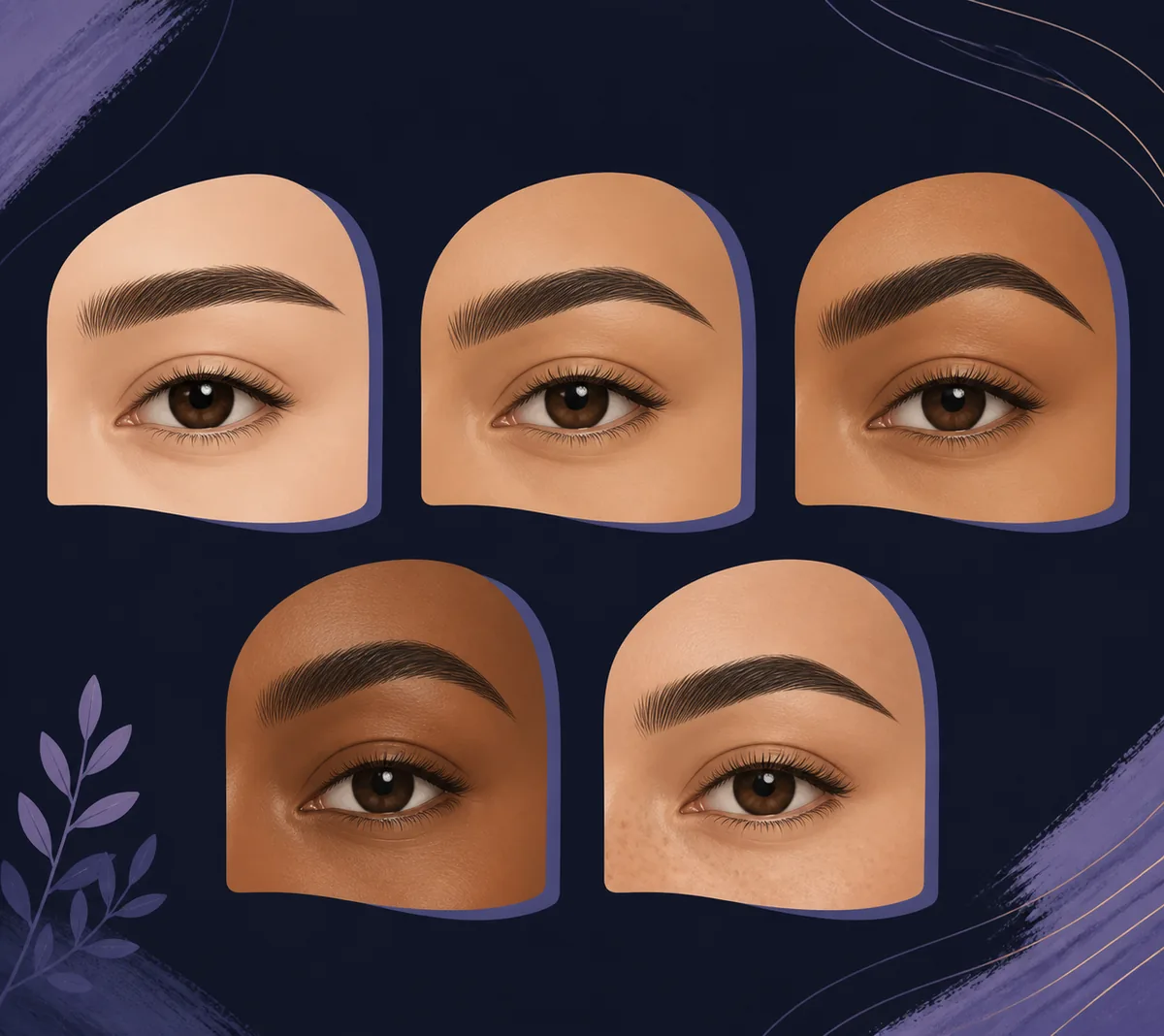
On this page
Searching for eyebrow shapes usually means you want two answers at once: what kind of brows you already have, and which changes might make your expression feel more balanced. The useful starting point is description, not correction. A straight brow, soft arch, high arch, rounded arch, or tapered tail can all look natural when it fits the rest of the face.
This guide separates the parts that people often mix together: outline, arch position, thickness, length, and tail direction. It also explains how to compare eyebrow shapes with face shape without turning a styling suggestion into a rule about attractiveness.
What do eyebrow shapes describe?
An eyebrow shape is the visible path from the inner brow through the arch to the tail. Two brows can have the same arch but look different because one is fuller, shorter, straighter, or more tapered. That is why labels such as straight, soft arch, high arch, rounded, thick, thin, short, and long often overlap.
Before choosing a style, look at your natural brow with a relaxed forehead and neutral expression. Makeup, trimming, waxing, threading, and brow gel can change the visible outline, but the underlying growth pattern still gives you useful information.
- Arch: where the highest point sits compared with the pupil and outer eye.
- Thickness: whether the brow stays full, narrows gradually, or becomes very fine.
- Tail: whether the outer end is short, long, lifted, level, or drops toward the temple.
- Spacing: how the inner brows relate to the nose, eyes, and the center of the face.
Best starting rule
Name the feature you want to change before naming a brow type. “I want a softer arch” is more useful than deciding that your whole face needs a different eyebrow shape.
How to identify your eyebrow shape
Use a mirror or an unfiltered photo taken from a moderate distance. Keep the camera at eye level, relax the forehead, and compare both sides. The goal is a repeatable observation, not a perfect measurement.
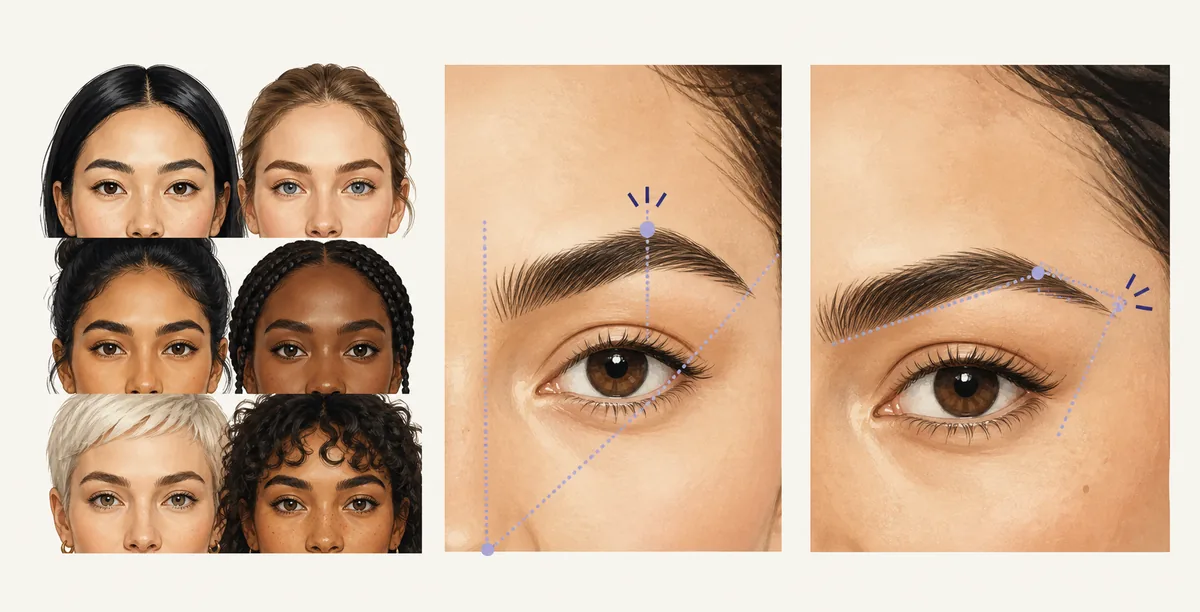
1. Start with a neutral view
Remove filters and strong brow makeup if possible. Look straight ahead with the forehead relaxed; lifting the brows can expose more lid space and make the arch appear higher.
2. Trace the main outline
Follow the top and bottom edges from the inner brow to the tail. Note whether the line is mostly horizontal, gently curved, sharply lifted, or irregular.
3. Find the arch peak
Look for the point where the brow changes direction. It may sit near the inner iris, farther outward, or be so soft that the brow reads as straight.
4. Check the tail
Compare the outer end with the inner brow and the outer corner of the eye. A tail can be lifted, level, low, short, long, fine, or blunt.
5. Separate shape from density
Fullness and outline are different observations. A thick straight brow and a thin straight brow share a shape family but create different visual weight.
10 common eyebrow shapes
These are useful vocabulary categories, not ten boxes that every person must fit. Your brows may combine two or three descriptions, and the left and right sides may not match exactly.
Straight brows
The brow travels with little visible lift from the inner start toward the tail. The result can look calm, clean, and horizontal.
Look for: A low or subtle arch and a fairly level top line.
Soft arch brows
The brow rises gradually and turns down without a sharp peak. This is one of the easiest shapes to adapt because the curve is gentle.
Look for: A rounded change of direction rather than a pointed summit.
High arch brows
The highest point sits noticeably above the inner and outer ends. A high arch can create a lifted impression, especially when the tail remains tidy.
Look for: A clear peak and a longer descent toward the outer end.
Rounded arch brows
The top line forms a smooth curve instead of a crisp angle. The shape can look open when the thickness stays even.
Look for: A continuous arc with no abrupt corner at the peak.
S-shaped brows
The line contains a slight inward and outward change, creating a subtle S-like movement. It may be natural or emphasized by uneven growth.
Look for: Two gentle direction changes rather than one single arch.
Thick or full brows
The brow keeps substantial hair density across much of its length. Fullness can coexist with straight, soft-arch, or high-arch structure.
Look for: A broad body and a tail that does not narrow too early.
Thin or fine brows
The brow has less visible density or a narrower body. Fine brows can still have any arch, tail direction, or length.
Look for: A slim outline, sparse areas, or a tail that becomes fine quickly.
Short brows
The inner start and tail occupy less horizontal space relative to the eye. Short length can make the brow feel lighter or more compact.
Look for: A tail that ends near the outer eye rather than extending beyond it.
Long brows
The tail extends farther toward the temple and frames more of the eye area. Length is separate from thickness and arch height.
Look for: An outer end that reaches beyond the eye corner without looking dragged down.
Tapered-tail brows
The brow gradually narrows toward a fine outer end. The transition can be natural or created with careful grooming and makeup.
Look for: A smooth decrease in density rather than an abrupt cut-off.
The features to compare before choosing a style
When people say a brow shape does or does not suit them, they are often reacting to one of these separate dimensions. Compare the dimension first, then decide whether a small styling change is useful.
| Feature | Question to ask | Useful clue | Keep in mind |
|---|---|---|---|
| Arch height | Where is the highest point? | Near the inner iris, outer iris, or barely visible | A raised forehead can make the arch look higher. |
| Top outline | Is the line straight, curved, or angular? | Horizontal, soft arc, or clear peak | Makeup can redraw the top edge. |
| Thickness | Does fullness stay consistent? | Full body, fine body, or fast taper | Thickness is not the same as shape. |
| Tail direction | Where does the outer end travel? | Lifted, level, low, short, or long | The eye corner and temple change the impression. |
| Inner spacing | Where do the brows begin? | Closer to the nose, aligned with the eye, or farther apart | Do not use a rigid one-size measurement. |
How eyebrow shapes relate to face shape
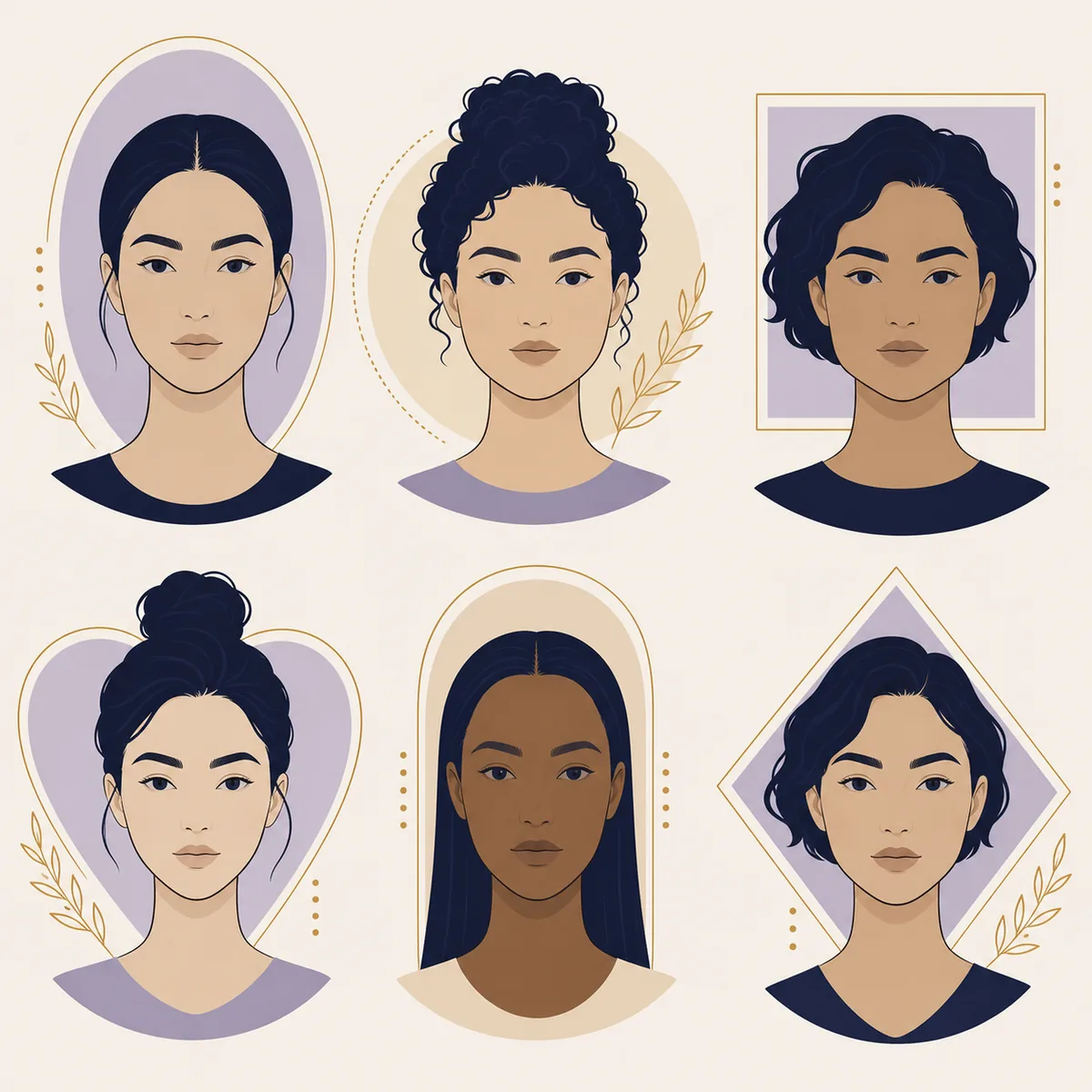
Face-shape matching can be a helpful styling prompt, but it should not be treated as a fixed formula. A round face does not require a dramatic arch, and a square face does not need a perfectly curved brow. Eye spacing, forehead height, hairline, expression, and personal style also change the result.
If you want to identify the broader outline first, start with the site's face shape test and compare the result with the brow notes below. The face-shape label describes the whole contour; eyebrow shape is one framing feature inside it.
Oval faces
Most brow families can work. A soft arch or natural straight brow often keeps the proportions calm; choose based on your eye area rather than trying to preserve a supposed ideal.
Round faces
A gentle lift or slightly longer tail can add directional contrast if you want it. Keep the transition soft so the brow does not become a harsh triangle.
Square faces
A soft arch can balance a stronger jaw, while a straighter fuller brow can also look intentional. Avoid treating angular features as something that must be hidden.
Heart-shaped faces
A rounded or soft arch can echo the upper face without making the tail feel heavy. Watch the brow thickness near the inner corner if the forehead is already visually prominent.
Oblong faces
A straighter, gently extended brow can add horizontal emphasis. A very high arch may make the face appear longer, but your eye shape and expression still matter more than the label.
Diamond faces
A curved or soft arch can work with prominent cheek width, while a controlled tail keeps attention from pulling too far outward. Use the smallest change that gives the effect you want.
What grooming can change—and what it cannot
Brow styling is usually reversible when you work gradually. Take a photo before changing anything, because a close mirror can make small edits feel larger than they are.
- Brushing upward can reveal the natural outline and make a soft arch easier to see.
- Trimming changes the edge and texture, not the underlying location of the arch.
- Removing a few stray hairs can clarify the tail, but over-plucking can make the outline harder to restore.
- Pencil, powder, gel, and tint can change apparent thickness and direction for a day without changing growth.
- If a new shape looks extreme in a close mirror, step back and check it in ordinary room light before making another change.
Why your eyebrows can look different in photos
A photo freezes one expression and one lens perspective. It can be useful for comparison, but it is not a neutral scan of your face.
- Use a camera at eye level and keep it far enough away to reduce wide-angle stretching.
- Compare a relaxed front view with a three-quarter view; do not let one angle decide your brow category.
- Keep lighting even and avoid strong light from only one side, which can make one arch look sharper.
- Do not raise one brow, squint, or smile while comparing left and right sides.
- Treat mirrored selfies, beauty mode, and heavy makeup as styling references rather than structural evidence.
What eyebrow shape cannot tell you
There is no single most attractive eyebrow shape that applies to every face. Brows interact with the eyes, forehead, nose, cheekbones, hair, expression, culture, and personal preference. A label is useful when it helps you communicate a styling goal, not when it becomes a verdict about your face.
Small differences between the two sides are normal. If a sudden change comes with pain, swelling, rash, hair loss, or another new symptom, an appearance guide is not the right tool; seek appropriate professional advice.
Eyebrow-shape FAQ
How do I know which eyebrow shape I have?
Use a relaxed front-facing mirror or photo and describe the arch, thickness, length, and tail separately. You may have a soft arch with thick brows, or straight brows with a tapered tail; more than one label can be accurate.
What is the most attractive eyebrow shape?
There is no universal winner. A brow can look harmonious when its thickness, arch, tail, and spacing work with the rest of the face, but personal style and cultural preferences matter too.
What eyebrow shape suits a round face?
A soft lift or a slightly extended tail can create more directional contrast, but you do not need a dramatic arch. Compare the result with your eyes, forehead, and natural brow growth before deciding.
Are straight eyebrows only for certain faces?
No. Straight brows can work on many face outlines. Their effect depends on thickness, length, spacing, and the rest of the expression—not on face shape alone.
Can I change my eyebrow shape?
You can change the visible outline with brushing, makeup, trimming, waxing, threading, or tinting. Make small edits and allow time for regrowth if you remove hair, because the underlying pattern changes slowly.
Do my eyebrows need to match exactly?
No. Mild asymmetry is common. Aim for a balanced impression rather than identical millimetre-by-millimetre lines, and compare both sides in ordinary light before correcting anything.
What are the main eyebrow shape names?
Common names include straight, soft-arched, high-arched, rounded, S-shaped, tapered and feathered brows. The names are descriptive rather than a ranking, and thickness, length and tail direction can create useful combinations.
Useful references
- Benefit Cosmetics: Brow Shapes and Styles — A current brow-style reference that illustrates common arch and outline vocabulary.
- Maybelline: How to Find Your Eyebrow Shape — A practical styling reference for comparing brow proportions and face context; use it as guidance, not a rigid rule.