Strong Jawline: What It Means and How to Tell
A practical guide to jawline contour, chin transition, face shape, photo perspective, and the difference between describing a feature and ranking a face.


On this page
Searches for a strong jawline mix several questions: what the phrase means, how to recognize it, whether it equals a square face, and whether exercises can change it. These need separate answers. A lower-face contour can be described without turning one feature into a score.
What does a strong jawline mean?
In everyday language, a strong jawline is a lower-face contour that reads clearly from the side, three-quarter view, or a well-lit front view. The line may run from the ear toward the chin, with a visible jaw-to-neck transition. It is not one exact measurement or bone type.
Bone shape, chin projection, the rear jaw angle, soft-tissue shadow, and styling can all create definition. A broad jaw may have a soft edge, while a narrow one can still look clear. Separate width, definition, and projection.
Best starting rule
Use a level front view for width, a relaxed three-quarter view for contour, and a side view for chin and jaw projection. Compare similar photos and describe what stays consistent instead of forcing a yes-or-no label.
What part of the face is the jawline?
The jawline is the visible lower border of the mandible, which supports the lower teeth and forms the lower face. In a portrait, follow the edge from near the ear along the jaw toward the chin. Skin, muscle, posture, facial hair, and camera angle soften it.
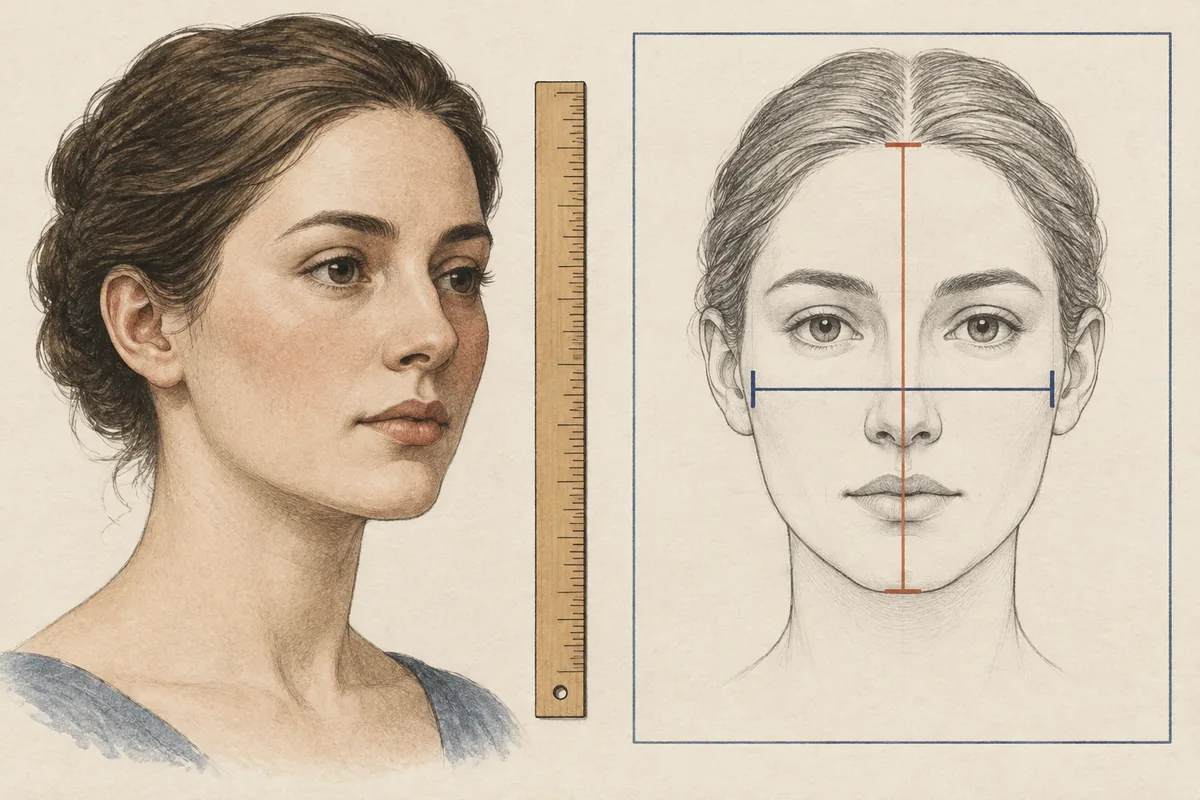
Strong jawline features to compare
These are related clues, not a checklist that every face must satisfy. A jawline may be strong in one sense and subtle in another. Compare the traits separately so a single angle or shadow does not become an exaggerated verdict.
Clear lower border
Common clue: The outer edge from the ear toward the chin stays easy to follow in a neutral view.
Keep in mind: Hard side light can draw a false line, while soft front light can hide a real one.
Defined jaw-to-neck angle
Common clue: The underside of the jaw separates from the neck without a large dark or blurred transition.
Keep in mind: Head tilt, posture, and camera height can change this angle within seconds.
Chin and jaw continuity
Common clue: The chin connects to the jaw in a smooth, readable shape rather than looking detached from the side.
Keep in mind: Chin projection is its own trait; it should not be used as a proxy for jaw width.
| Feature to compare | What it may show | What it cannot prove | Why it matters |
|---|---|---|---|
| Lower border | A readable edge from ear toward chin | A universal beauty ranking | The contour is easier to compare than a vague score. |
| Jaw-to-neck angle | A distinct transition in a controlled view | A permanent result from one pose | Posture and camera height change the angle. |
| Chin projection | How far the chin sits forward in profile | Jaw width or overall facial harmony | Chin and jaw are related but separate observations. |
How to tell if you have a strong jawline in a photo
A repeatable check is more useful than a close selfie. Use one neutral photo first, then a second angle for context. Keep the camera farther away than a typical arm's-length wide-angle selfie and avoid changing the light between comparisons.
1. Choose a neutral reference
Use even light, a relaxed mouth, level eyes, and a camera near eye height. Keep the head centered and avoid a filter, beauty mode, or dramatic expression. A photo taken farther away and cropped later usually changes proportions less than a close wide-angle selfie.
2. Check the front outline
Look from below the ear toward the chin and ask whether the lower edge remains readable on both sides. Compare it with the cheek and forehead width, but do not turn a broad outline into a claim about health, character, or attractiveness.
3. Check the three-quarter transition
Turn slightly without lifting the chin. Notice whether the angle from cheek to jaw and the turn into the neck remain visible. This view adds depth information, yet it is still affected by light and head rotation.
4. Separate chin projection
Use a gentle side view to observe whether the chin sits forward, back, or close to the lower lip. A projected chin can strengthen the profile while the jaw itself remains narrow, so write those observations separately.
How jawline, face shape, and styling interact
Face shape describes the whole outline; jawline definition describes one lower-face transition. A square face may have a broad but soft edge, while an oval or oblong face may have a narrow, clear contour. Other face shapes vary too.
Many changes are photographic rather than skeletal. Lens distance, camera height, tilt, posture, expression, beard, hair, makeup, and one-sided light can create or erase a shadow. Treat a photo as a controlled observation, not a permanent identity measure.
Sharp, strong, and defined are not identical
Sharp usually describes a crisp edge or angle, strong suggests visual structure or presence, and defined means the border is easy to distinguish. People use these words interchangeably online, but a careful guide should keep the distinctions visible.
Soft tissue changes the view
Skin, muscle, normal facial fullness, hydration, and age influence shadows around the jaw without making one face better or worse.
Limits and safe expectations
There is no universal strong-jawline measurement for ranking faces. Sources use different landmarks, lighting, samples, and cultural preferences. Treat the phrase as a description, not a target that determines worth.
Chewing gum, jaw exercisers, extreme diets, and repeated clenching are not guaranteed ways to remodel bone and may irritate teeth or the jaw. Styling changes a photo; persistent pain, swelling, numbness, bite trouble, or sudden change needs professional advice.
Strong Jawline FAQ
What is considered a strong jawline?
Usually, people mean that the lower jaw border and its transition into the chin or neck are easy to distinguish in a neutral view. There is no single official cutoff, and width, projection, soft tissue, posture, and lighting all affect the impression.
How can I tell if I have a strong jawline?
Use a level front view for the outline, a relaxed three-quarter view for the jaw-to-neck transition, and a side view for chin projection. Repeat the check in similar conditions and describe what stays consistent rather than relying on one selfie.
Is a strong jawline the same as a square face?
No. A square face often has more width through the jaw, but a strong jawline refers to how clearly the lower border reads. An oval, oblong, heart, or diamond face can also have a defined jawline.
Can chewing gum or jaw exercises create a strong jawline?
They should not be presented as guaranteed ways to change the jawbone. Excessive chewing or clenching can irritate the jaw and teeth. Styling, posture, camera conditions, and normal changes in soft tissue affect photos, while persistent pain needs professional advice.
Why does my jawline look different in photos?
Close lenses, camera height, head tilt, expression, one-sided light, beard length, makeup, and image processing can change the lower-face shadow. Compare a neutral photo taken from farther away with similar lighting before drawing a conclusion.
When should a jaw change be checked by a professional?
Seek appropriate medical or dental advice for new pain, swelling, numbness, a sudden change after injury, locking, trouble opening the mouth, or a bite problem. An appearance guide cannot diagnose the cause of those symptoms.
Sources and further reading
- Mandible anatomy reference — A general anatomy reference for the mandible, the bone that forms the lower jaw and chin.
- Facial analysis measurement literature — A PubMed search entry point for research on facial landmarks, photography, and measurement definitions.